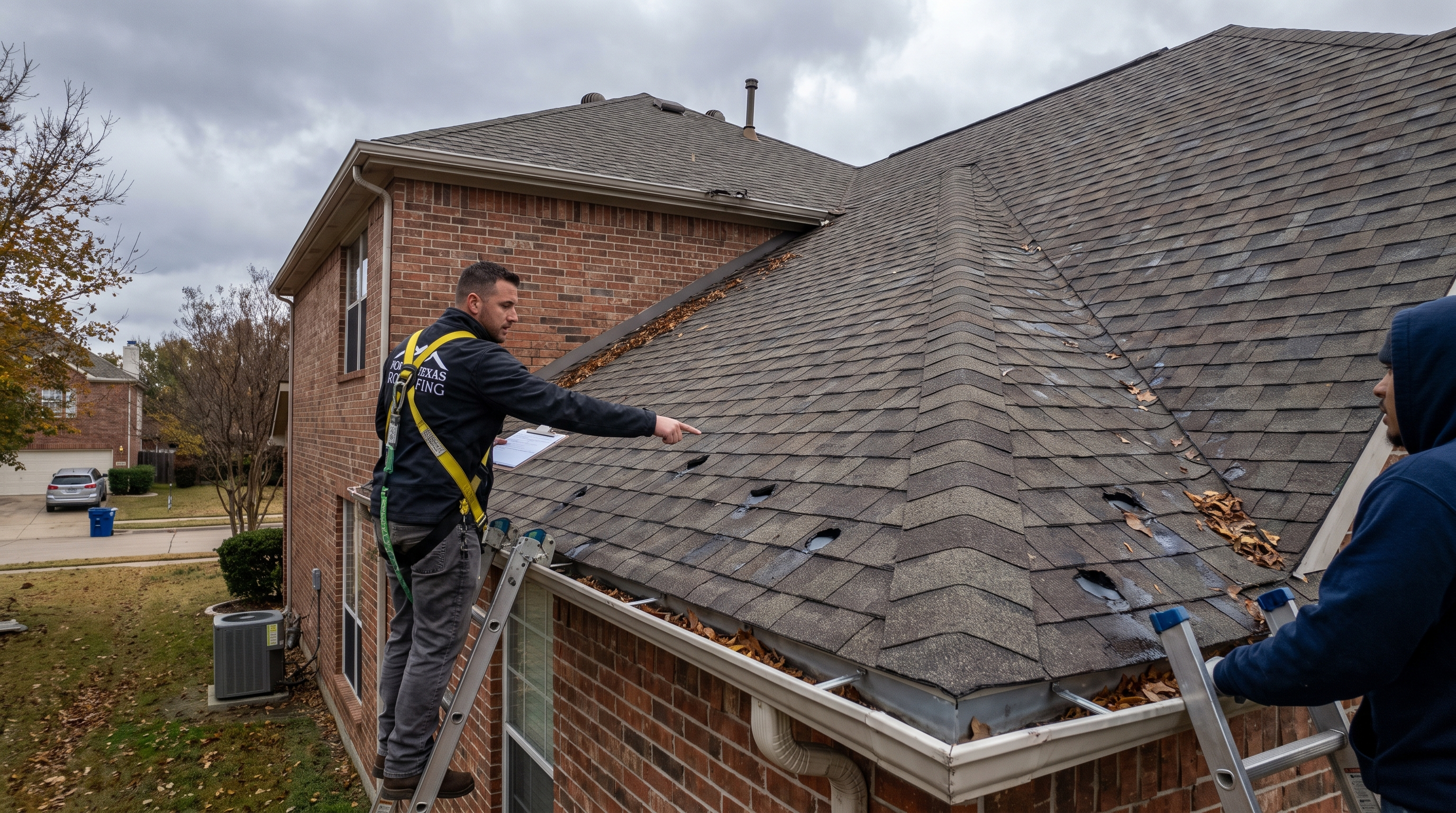
McKinney's free storm damage inspection specialists
Get the roof checked before filing
A free inspection gives you photos, damage notes, and a clearer answer before a hail claim starts.
McKinney's free storm damage inspection specialists
A free inspection gives you photos, damage notes, and a clearer answer before a hail claim starts.
After a McKinney hailstorm, the first move should be a physical inspection of the roof system. Filing a claim without knowing what is on the roof can create problems if the carrier finds no functional damage or decides the marks came from an older event.
A storm damage inspection checks slopes, ridge caps, valleys, pipe jacks, box vents, turbine vents, flashing, gutters, downspouts, screens, and other soft metals. The contractor looks for impact direction, hit density, granule displacement, circular bruising, fractured tabs, exposed asphalt, and dents that match the storm path.
McKinney's newer subdivisions often have steep rooflines, architectural shingles, and multiple roof planes. Those shapes can hide damage on upper slopes or windward faces that are not visible from the driveway.
The inspection should produce clear photos and notes so the homeowner can make a clean decision: no claim, monitor the roof, or move forward with an insurance claim while the filing window is still open.
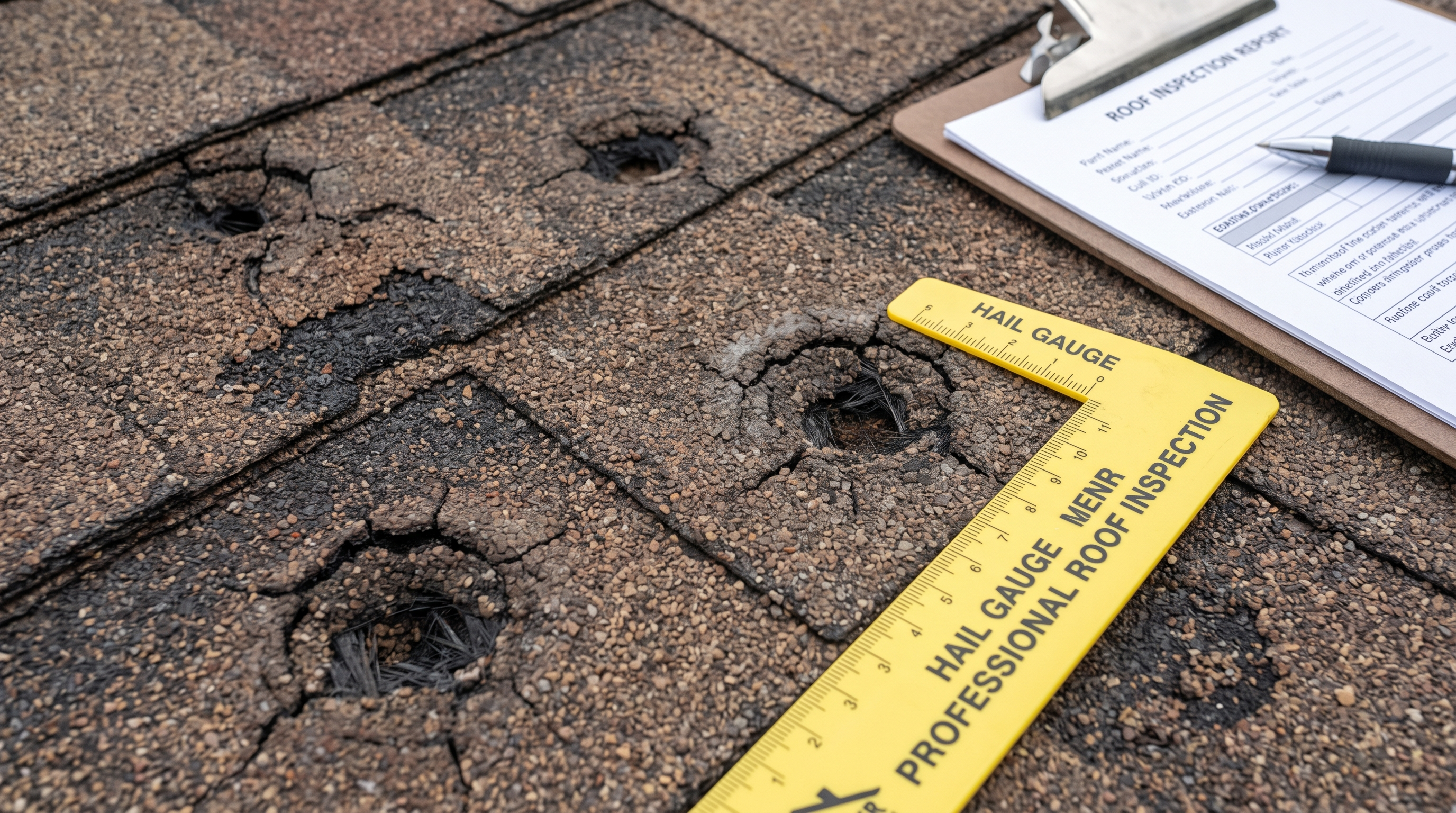
A storm inspection documents the full roof system before the insurance process starts.
The contractor checks shingles by slope for bruising, granule loss, creases, fractures, and hail-hit patterns. Impact density and storm direction help separate hail damage from ordinary wear.
Vents, caps, flashing, gutters, downspouts, screens, and other metal components can hold clear hail evidence. Dents on these items support the storm story when shingle damage is less obvious.
Inspection photos are organized by roof area and component. That documentation helps the homeowner decide whether a claim makes sense and gives the adjuster a clearer starting point.
You get a roof condition read before opening a claim. That helps avoid unnecessary filings and gives you better evidence when damage does justify a claim.
North Texas storms can damage one slope harder than another. The inspection follows wind direction, roof shape, age, and surrounding exposure instead of checking the easiest access point.
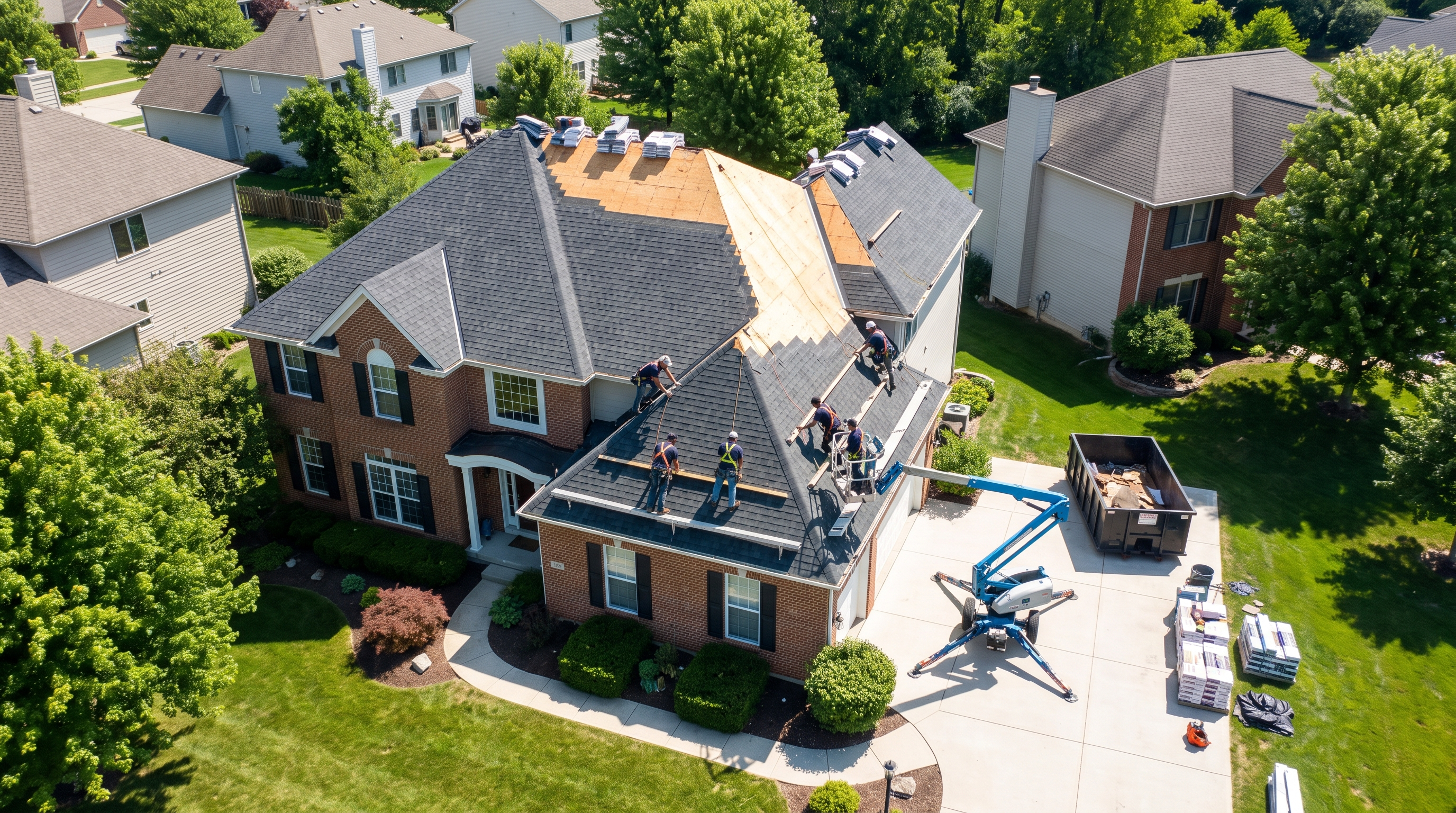
Request a free McKinney storm inspection before the claim deadline gets closer.
Free — no obligations
Review the approximate storm date, hail size, visible property damage, roof age, and insurance carrier information.
Inspect shingles, ridge caps, vents, flashing, valleys, gutters, downspouts, and other components for hail impact evidence.
Capture damage photos, slope notes, and component details so the findings are easy to review.
Explain whether the damage appears claim-worthy, borderline, or unrelated to hail so the homeowner can choose the next step.