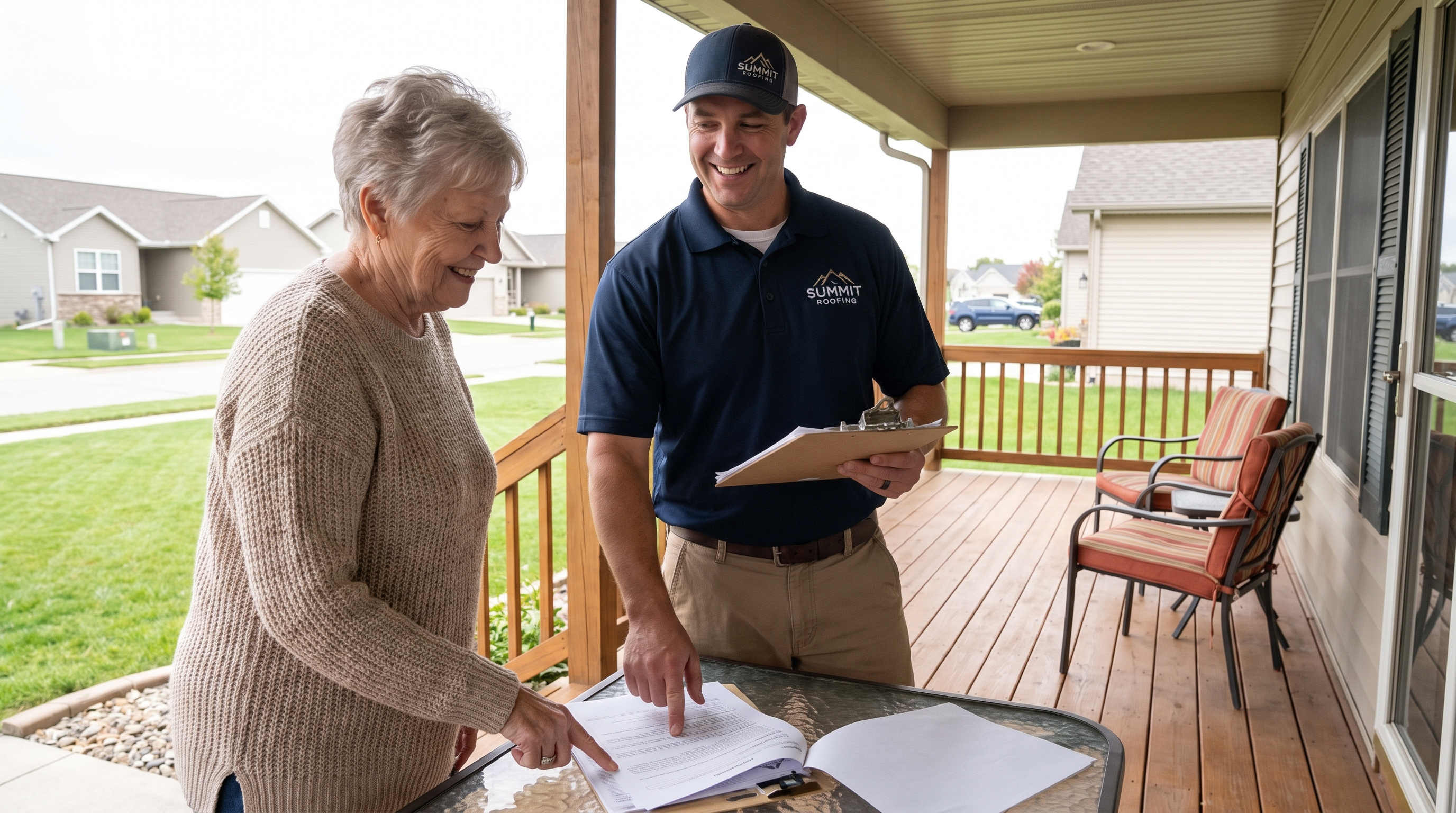
McKinney's hail damage assessment specialists
Find the damage insurance cares about
Functional hail damage needs clear evidence, not a quick glance from the ground.
McKinney's hail damage assessment specialists
Functional hail damage needs clear evidence, not a quick glance from the ground.
Architectural shingles in McKinney can show wear from heat, UV exposure, tree debris, and foot traffic. Hail damage has a different pattern. It often appears as soft bruises, circular granule loss, fractured asphalt mat, broken ridge caps, and matching dents on vents or gutters.
A hail damage assessment focuses on function. Cosmetic dents can matter for some components, but asphalt shingle claims rely on proof that impacts shortened the roof's life or compromised the shingle mat. That is why inspectors press suspect spots, check the mat, compare slopes, and document hit counts within test squares.
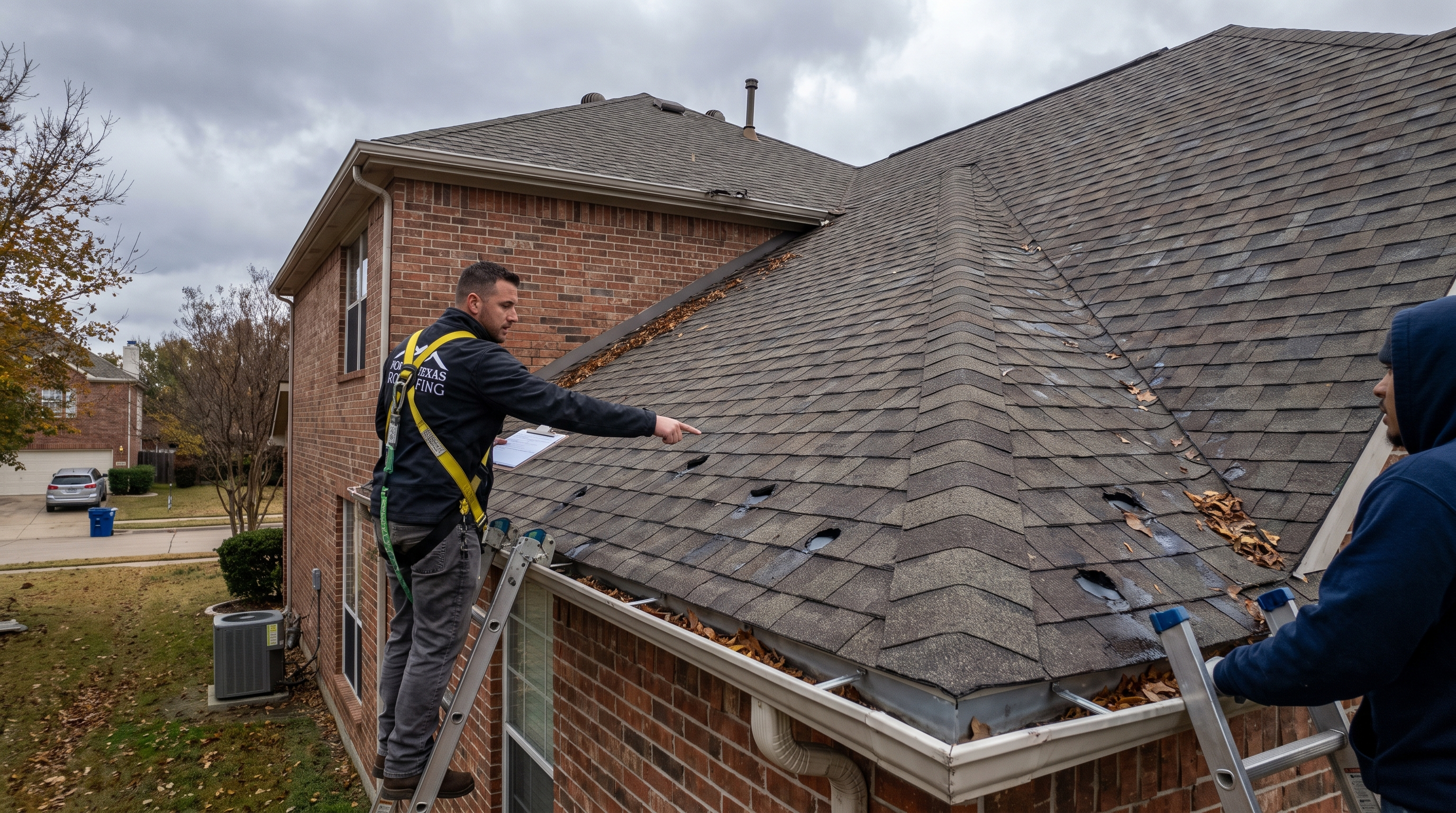
Collin County storms can drop hail at an angle, so one face of the roof may carry most of the damage. North-facing or windward slopes, upper roof sections, and unprotected areas near open lots need careful review.
The assessment gives the homeowner a technical basis for the claim. It also helps the contractor speak the same language as the adjuster when both parties review the roof.
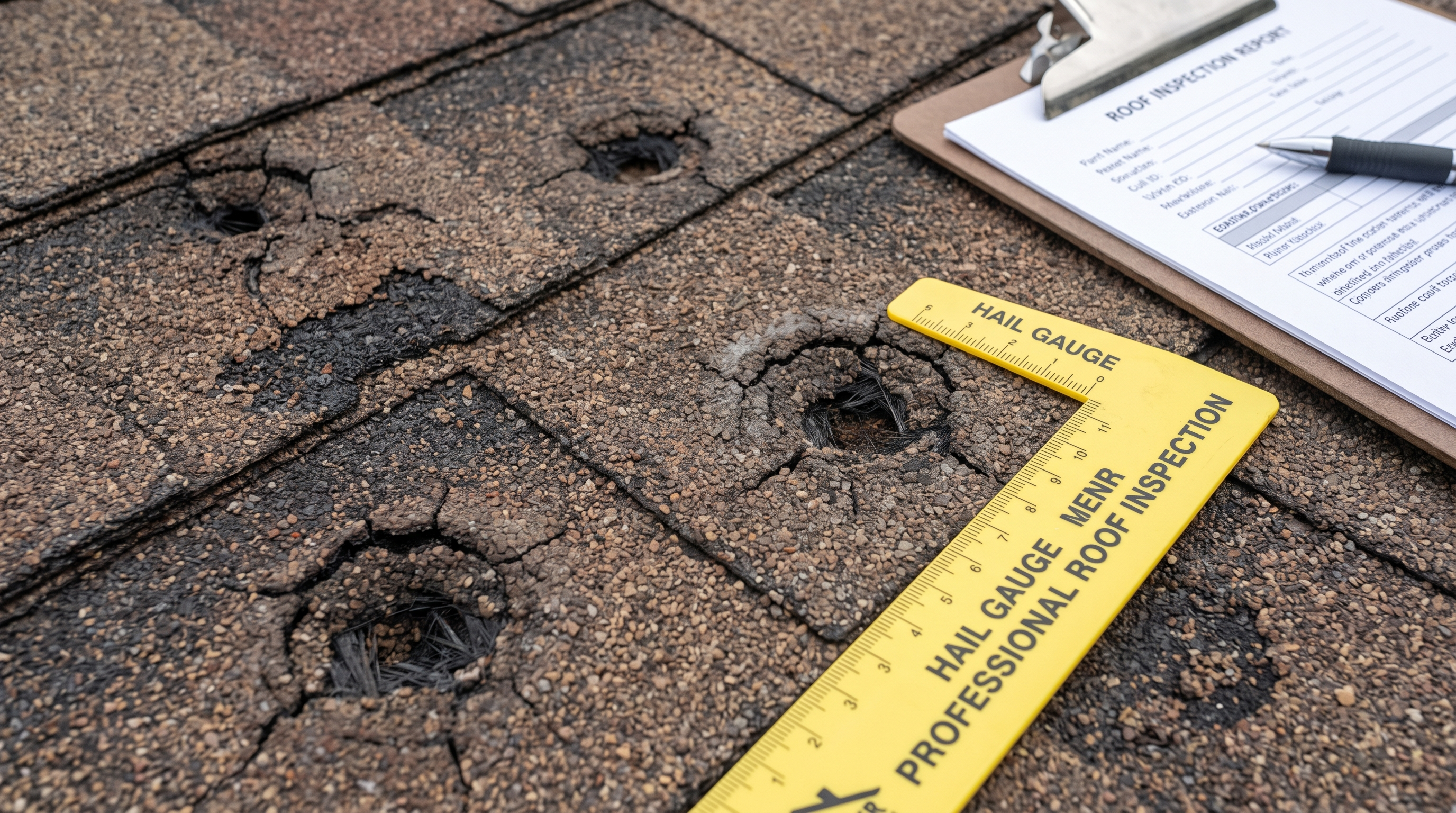
The assessment looks for physical evidence that hail damaged the roof system rather than surface wear alone.
Inspectors identify bruised mats, fractured shingle surfaces, displaced granules, loosened tabs, and impact points. They compare the marks against roof age and weathering so the report does not overstate normal wear.
Representative roof areas may be marked and photographed to show hit density. This gives the adjuster a cleaner way to review damage instead of relying on scattered photos.
Dented vents, gutters, downspouts, screens, fascia, and metal caps support the hail event timeline. These components can also become separate repair or replacement items in the claim.
The assessment ties damage to visible roof conditions, soft metal impacts, storm direction, and the reported weather event. That gives the claim a stronger foundation.
McKinney roofs take heat and hail year after year. A technical assessment helps separate storm damage from age, blistering, mechanical scuffs, and manufacturing issues.
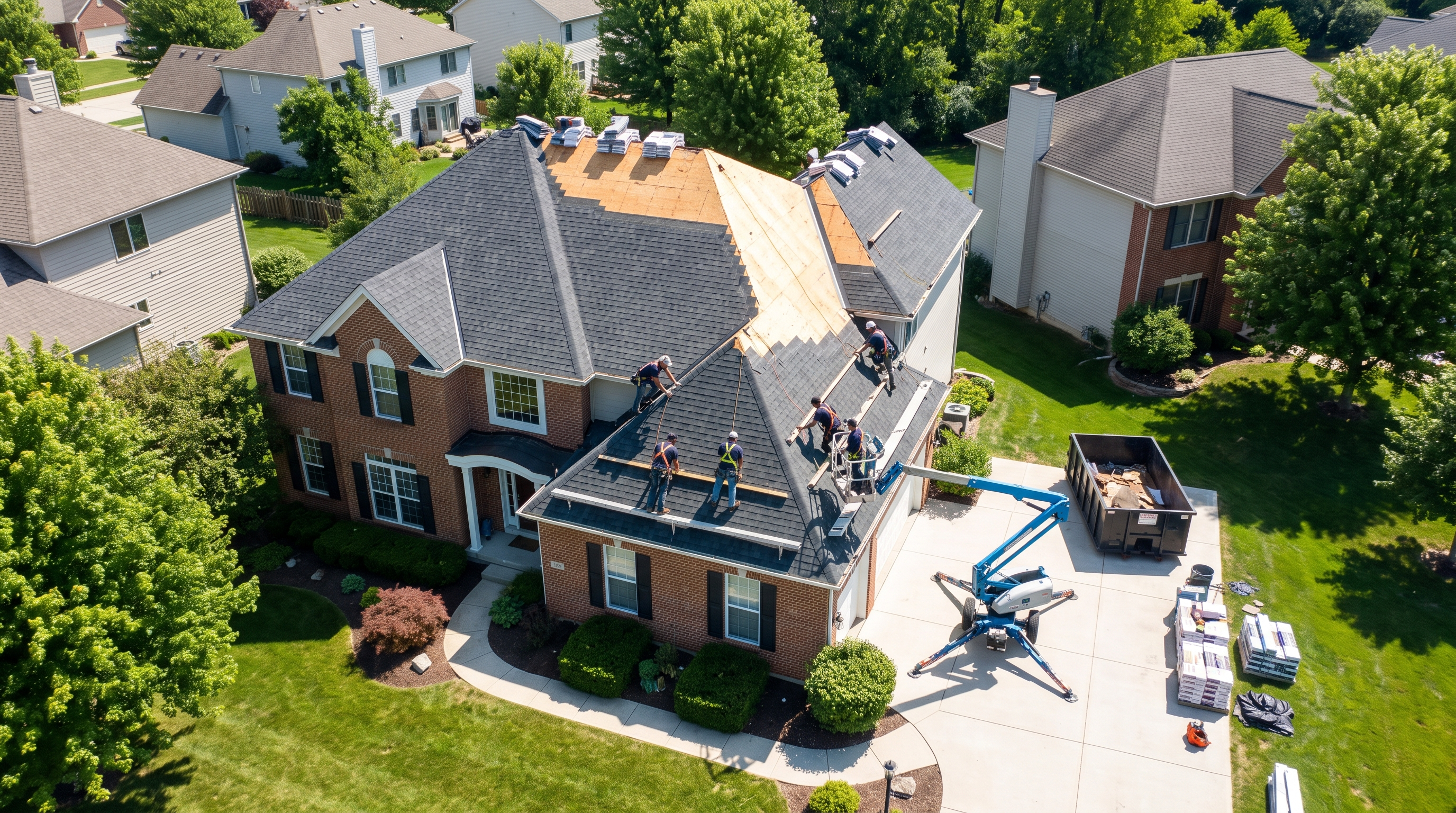
Get a roof damage assessment while impact marks are still fresh.
Free — no obligations
Confirm roof age, shingle type, known storm date, hail size, prior claims, and any interior leaks or visible exterior damage.
Inspect each slope for hit patterns, bruising, granule loss, fractured ridge caps, and matching metal dents.
Organize photos, notes, and component findings so the homeowner can understand whether functional damage exists.
Discuss whether to file a claim, monitor the roof, or address smaller repairs outside a claim.