Serving Celina
Hail Damage Assessment in Celina
Call us for a free hail damage assessment estimate
Serving Celina
Call us for a free hail damage assessment estimate
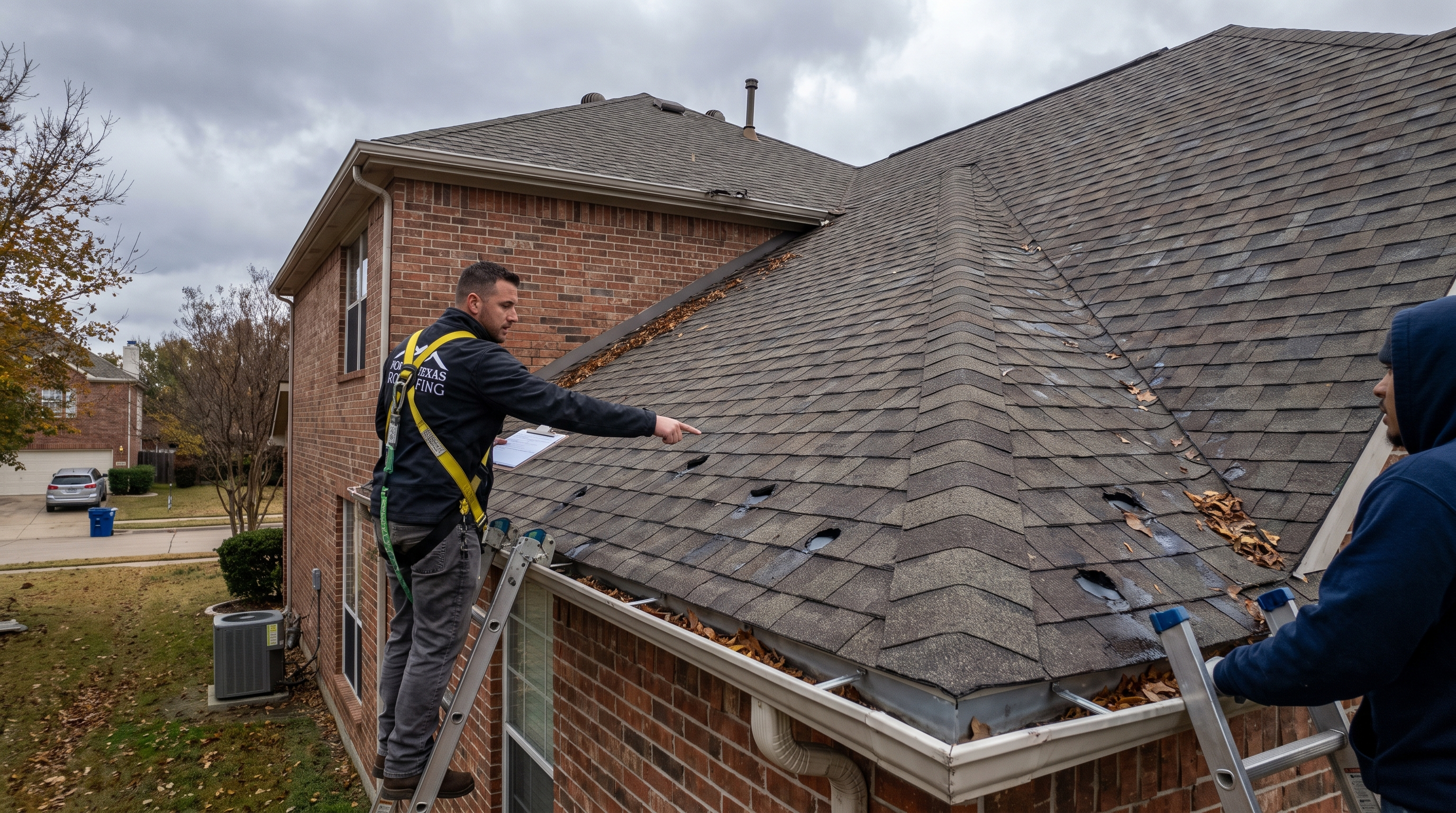
Architectural shingles in McKinney can show wear from heat, UV exposure, tree debris, and foot traffic. Hail damage has a different pattern. It often appears as soft bruises, circular granule loss, fractured asphalt mat, broken ridge caps, and matching dents on vents or gutters.
A hail damage assessment focuses on function. Cosmetic dents can matter for some components, but asphalt shingle claims rely on proof that impacts shortened the roof's life or compromised the shingle mat. That is why inspectors press suspect spots, check the mat, compare slopes, and document hit counts within test squares.
Collin County storms can drop hail at an angle, so one face of the roof may carry most of the damage. North-facing or windward slopes, upper roof sections, and unprotected areas near open lots need careful review.
The assessment gives the homeowner a technical basis for the claim. It also helps the contractor speak the same language as the adjuster when both parties review the roof.
Celina's growth has brought new subdivisions, open lots, and homes with modern architectural shingles. Newer does not mean hail-proof. A strong Collin County storm can bruise shingles, dent vents, mark gutters, and damage ridge caps even when the roof is a few years old.
Open land around developing neighborhoods can leave roof slopes exposed to wind-driven hail. Inspectors should check the storm-facing side first, then compare each slope, gutter run, vent, and downspout for a matching impact pattern.
McKinney Hail Roof Replacement helps Celina homeowners get connected with storm contractors who can inspect, document, file with the carrier when appropriate, meet the adjuster, and replace the roof after approval.
The assessment ties damage to visible roof conditions, soft metal impacts, storm direction, and the reported weather event. That gives the claim a stronger foundation.
McKinney roofs take heat and hail year after year. A technical assessment helps separate storm damage from age, blistering, mechanical scuffs, and manufacturing issues.
Get a roof damage assessment while impact marks are still fresh.
Free — no obligations